Pursuit of Privacy: AMA FIRO with Reuben Yap
INTERVIEW · AMA · 21 March 2022
Pursuit of Privacy: AMA FIRO with Reuben Yap
Editorial note — April 2026
This AMA was conducted in March 2022 and is preserved here for archival reference. Several technical milestones discussed (Lelantus Spark, Spats, Helsing, Aura, FiroDEX, Elysium) have since shipped, evolved or been deprioritized. Market conditions, masternode statistics and roadmap claims are no longer current. The strategic positioning of Firo within the broader privacy-coin landscape remains a useful reference point, but always verify current technical details and project status directly with the Firo team.
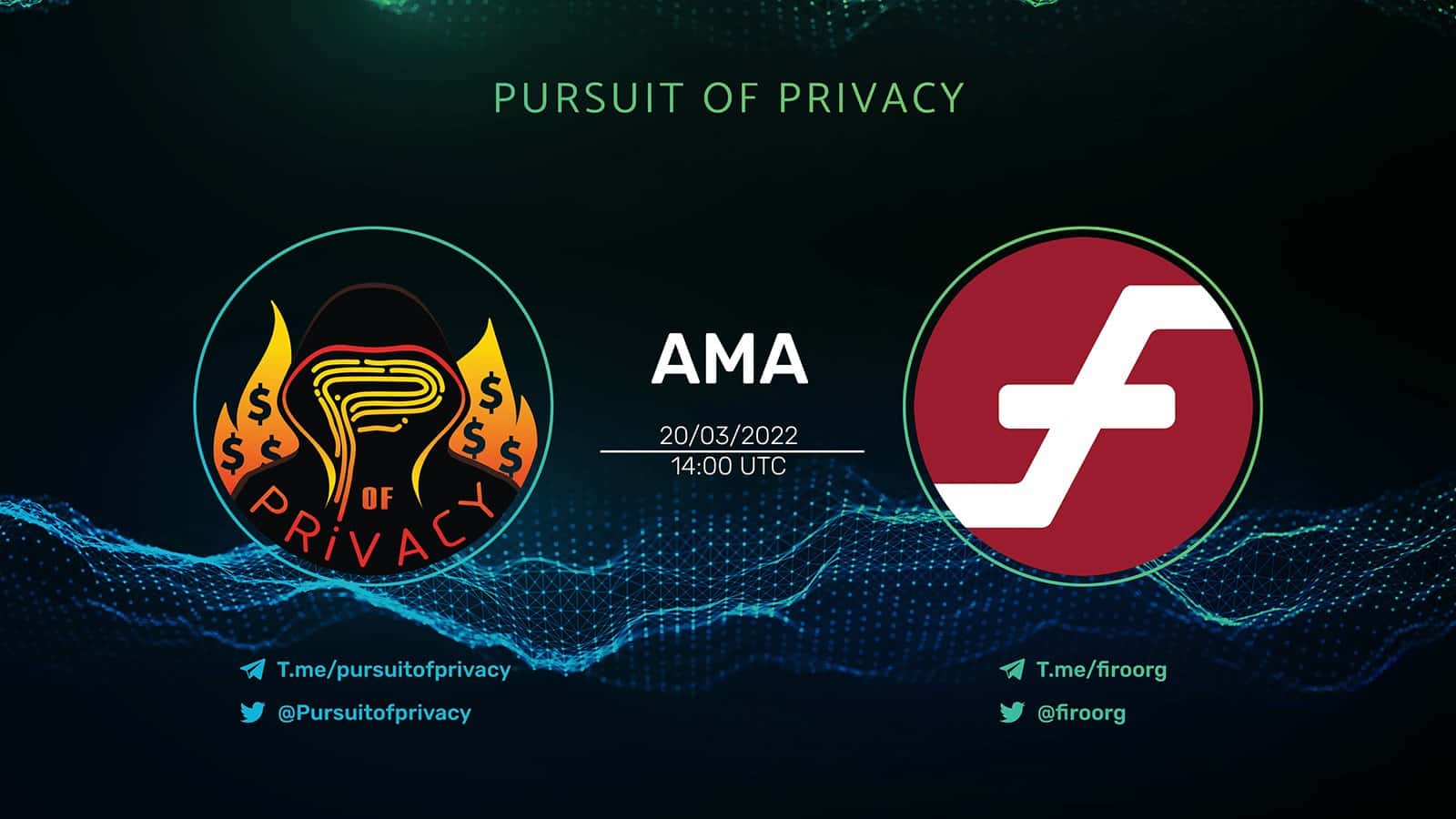
This AMA was hosted by Mr Kwibs from the Pursuit of Privacy community, with answers from Reuben Yap, Project Steward of Firo. Reformatted for readability; the original conversational tone is preserved as faithfully as possible.
Connect with Firo
- Website: firo.org
- Telegram: t.me/firoorg
The AMA
Q1 — What are your thoughts on privacy, and how can Firo be part of the answer?
Reuben (Firo): Privacy is one of those things we have taken for granted. Cash is private — unless you have someone tailing you, your movements were private. The rapid transition to a connected world meant society had yet to catch up to the implications. Before we knew it, the likes of Google and Facebook sucked up all this data we gave away for free, and governments started performing mass surveillance. Whatever your views are on Snowden, his leaks made many people wake up.
We are now reaching an important juncture: the same is happening to our money. Cash is being displaced in favour of digital payments — in China, WeChat Pay and Alipay are the norm. The next step is Central Bank Digital Currencies (CBDCs). It basically allows a central bank to view the movement of all money and to even lock people out of its system. Firo and other privacy-preserving cryptocurrencies serve as an alternative to these surveillance systems and a chance to preserve money as a public utility — one that is free from borders or centralized ownership. Firo is at the forefront of this with a focus on building the underlying privacy protocols and technologies that enable and power this future.
Q2 — Zencash (now Horizen) was the first to develop a smart contract / token ecosystem. Can you explain Firo’s shift in strategy and the development of ‘Elysium’?
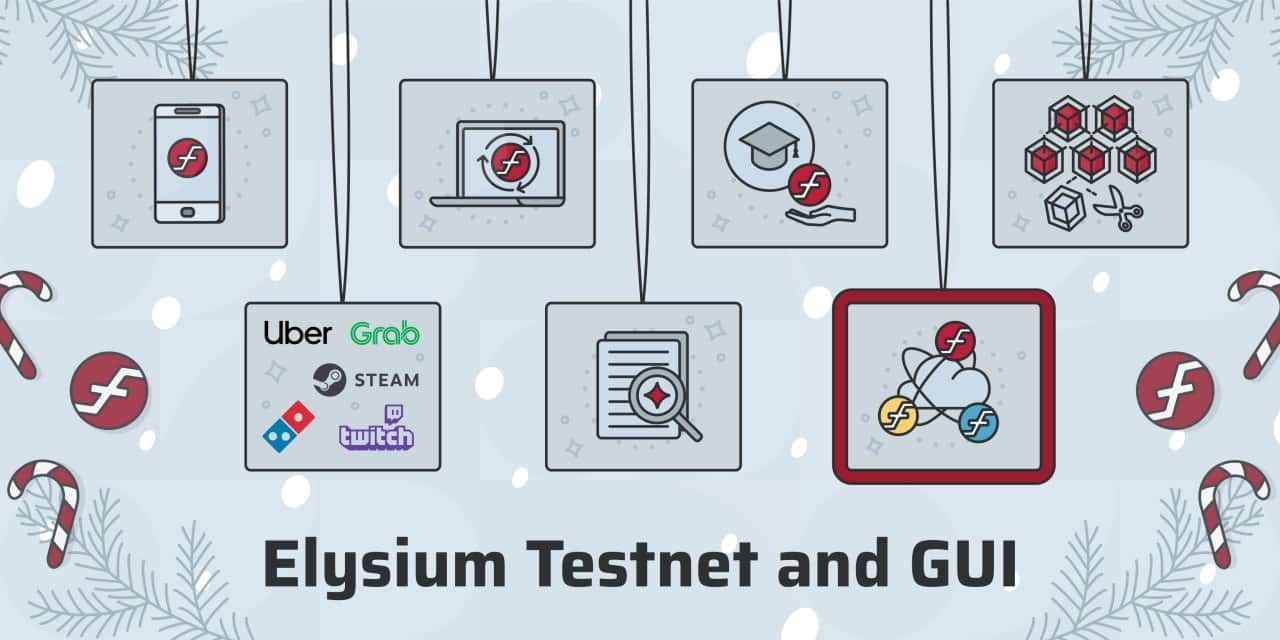
Reuben (Firo): Horizen pivoted away from privacy to focus on sidechains. The idea of Elysium is to allow others to build their own tokens on top of our ecosystem and use our technology. We aren’t sure in the current market if just being a privacy coin is enough. Elysium also allows tokens from other chains to bridge in — for example bridging DAI or USDC into Elysium and making them private there. This leverages the network effects of those stablecoins without the legal morass of issuing your own. It also opens the ability to create voting systems using Elysium tokens and Lelantus technology. Elysium is currently on testnet; we’re already in the planning stage for Elysium v2.
Q3 — Can Firo become a leader in the privacy sector? Will there be just one leader, or room for several major projects?
Reuben (Firo): Monero is the current blue chip along with Zcash. Monero had a strong first-mover advantage. Zcash has great technology and serious VC investments. The market is large enough to fit several privacy coins, especially as people are realizing the importance of privacy with recent regulation and enforcement developments. Firo offers a very good balance: much larger anonymity sets than Monero, more open to changes beyond just being a privacy coin. Zcash has become increasingly opaque with their R&D, with strong reliance on ECC. Firo’s Lelantus Spark is much more modular and relies on simpler, well-understood cryptographic components — easier to audit while providing very large anonymity sets. We’ve had setbacks (hacks, a 51% attack, a malicious seed investor) but all of those are behind us.
Q4 — Can you explain ‘Lelantus Spark’, the differences from zk-SNARKs, and possible evolutions (Halo 2, Sonic)?
Reuben (Firo): Lelantus Spark uses zero-knowledge proof technology but is completely different from zk-SNARKs. We use a membership proof called one-out-of-many proofs (Grootle proofs), which only rely on discrete-log assumptions and are pretty efficient. We also use Bulletproofs+ for range proofs and have our own balance proof. These are all modular and can be replaced with newer constructions at any time. Unlike zk-SNARKs, Grootle proofs don’t require any trusted setup and don’t rely on knowledge-of-exponent assumptions.
Halo2 is exciting tech and on our radar but yet to be deployed. The recent audit showed several parts lacked cryptographic security proofs. It also lacks a traditional academic paper that makes it harder to analyze. Spark takes a middle ground — a more conservative approach while offering flexibility, optional auditability and modular structure. Seraphis (a privacy protocol being considered by Monero) takes a lot of ideas from Spark, which is why it looks similar — but Firo’s implementation will use much higher anonymity sets.
Q5 — What other research and development is the Firo team working on?
Reuben (Firo): Several research projects: Spats (Spark Assets) hides asset type with Lelantus Spark — outsiders won’t know whether you’re sending USDT, DAI or another Elysium token, and any transaction on Elysium v2 would increase the anonymity set of all other assets. Helsing enables masternode staking with Lelantus Spark for added privacy. Aura (paper to be released) enables private voting with quadratic or preference voting support — useful for DAOs and a possible future Firo DAO. We’re also actively researching trustless bridging from other protocols, evaluating an Avalanche-style consensus model that could replace masternode consensus, and exploring mixnets.
Q6 — How do you survive and finance the project given that the price of FIRO has not changed much in 3 years?
Reuben (Firo): Many reasons, but most of them are behind us. The biggest single factor was a malicious seed investor who tried to take control of the project from the community, failed, and in retaliation dumped on us strategically for an entire year. Any release we made — he dumped on it. The 51% attack was also a clear targeted attack: a few million Firo were acquired to do the double spend, executed with a rented GPU farm (not Nicehash). It was designed to hurt us and get us delisted from exchanges — this happened weeks before we were scheduled to deploy Chainlocks, which would have made the attack impossible.
We’ve had a supportive community with donations. Other seed investors helped cover expenses during the toughest times. Our developers have been loyal — they’ve been offered higher salaries elsewhere but they enjoy working with us and believe in what we’re building. I’ve myself gone without salary for several months during tough times. Some contractors waived their fees to help us.
Q7 — What’s your view on the change of governance — can a corporate-style project transition to a community project?
Reuben (Firo): I disagree that we’re a ‘business’ — we don’t make any profit from this. There’s a reason my title is not CEO, it’s Project Steward. We are self-financed from the block reward but accountable to our community. One thing the core team perhaps lacked is fostering a community culture. 85% of the supply goes to community for Firo. We organize many community meetings and have a Firo Crowdfunding System where anyone can open a proposal for the community to fund. There’s discussion in our forums about creating a separate community fund — something I would definitely support. My personal hope is that eventually the ‘dev fund’ can be converted to a pure ‘community fund’ when the community is educated and strong enough.
Q8 — Where do Firo and other L1 privacy projects stand compared to L2 privacy (Suterusu, Aztec 2.0) or Tornado Cash?
Reuben (Firo): One main issue with L2s is that you often have to bridge from L1 into L2, which results in delays — in some ways the same time as bridging into a privacy coin. L2s also only provide privacy for that one chain, while Firo eventually sees itself as a one-stop-shop for many other chains to bridge into. I have great respect for Aztec; their cryptographer Ariel Gabizon is actually a fan of our Lelantus work. Tornado Cash uses fixed denominations and its anonymity set is limited per asset type — if not many people anonymize DAI, you don’t get much anonymity. Interaction with mixers can also result in being flagged. With dedicated privacy chains this isn’t an issue, and while we face resistance from exchanges and regulation, focus brings advantages.
Q9 — Many exchanges have unlisted privacy coins. Is Firo concerned?
Reuben (Firo): Sure, this is a concern, and it’s sad given how subjective the criteria are. What is a privacy coin? If a coin has privacy-preserving tech does it make it a privacy coin? We have seen chains strip off their privacy features to avoid this classification. We are against excessive regulation but accept regulation as a reality. We won’t compromise our core values, but we can build tools to help those who have to comply. With Lelantus Spark, Spark addresses have flexible view keys: selective disclosure of a wallet or single address, both incoming and outgoing. Monero’s view keys only see incoming and can’t ascertain balance. We’re also big on DEXes — we recently launched FiroDEX, powered by AtomicDEX, which doesn’t rely on smart contracts and supports atomic swaps with many networks (AVA, BSC, ETH, Moonbeam, etc).
Community questions
Besides being a peer-reviewed private-transaction platform, FIRO will be capable of synchronizing with other blockchains and running smart contracts. How does this work in the privacy framework? — Nazgul
Reuben: Bridges into our Elysium tokenization layer allow tokens from many other chains to enjoy Lelantus privacy. Smart contracts are something that isn’t trivial and introduce a lot of attack surface, so we’re doing research on what core functionalities we need — this will come in Elysium v2. In DeFi we’ve seen countless hacks, flaws and rugs. Do you think we’re really ready for full private DeFi when you won’t even know that something goes wrong?
Thanks to Reuben Yap for taking the time to participate in this AMA. We will be following Firo’s progress closely.
Stay in the loop
Crypto Lowcap is an independent media outlet covering privacy, decentralization and low-cap innovation since 2016. We never accept paid coverage — our analyses are our own.
Follow Rowenta on X · Follow The Dowser on X
Liked this piece? Share it, challenge it, or send us the next project we should investigate.