DragonX: Exclusive Interview
INTERVIEW · 10 December 2024
DragonX: Exclusive Interview
Summary
DragonX is a project that places confidentiality at the heart of its operation, drawing inspiration from privacy benchmarks such as Monero and Zcash. Launched with no premine or founder rewards, DragonX aims to offer a secure, anonymous payment solution accessible to all thanks to its RandomX mining algorithm, which enables ordinary computers to participate. All transactions are protected by default, and the project goes beyond payments by also serving as a platform for private communications via Hush Arrakis Chains. Whether you are a technology enthusiast or simply curious to explore what blockchain can offer, DragonX promises a unique and engaging experience — and a clear stance on privacy as a fundamental right.
Connect with DragonX
- Website: dragonx.is
- Telegram: dragonx.is/tg
- Twitter: @DragonXchain
The interview
Q1 — Tell us a little about yourself: what is your background? What motivated you to create DragonX?
I got into crypto in 2013 on the heels of the 2012 Ron Paul run for president. For obvious reasons Bitcoin appealed to me — screw ending the Fed, we’ll simply opt out. I joined The Crypto Show in February 2014, a pirate radio show in Austin, TX that went on to air in 8 major cities on Bloomberg Radio. We were sponsored by Dash for several years and that was an awesome experience — Dash had a fantastic community. We leveraged the radio show to travel around the US and Mexico to respond to natural disasters giving aid and relief 100% in crypto: high water rescues and recovery aid during Hurricanes Harvey, Maria, Irma and Ida. During the 2017 Mexico City earthquake we rebuilt 4 homes and a community center with help from Dash and Roger Ver.
As far as DragonX, it was a journey that started 3.5 years ago. After being a little disgusted by the Maxi mentality of not only Bitcoin but Monero as well, I started a little meme coin called Manure0 on an obscure chain called Aspire. It was centered around poop jokes and poop memes — a privacy shitcoin with zero privacy. I decided to make it as private as possible. After over a year of researching what chain to fork it from, I landed on Hush. Hush offered the tools to do it and I found the Hush team to be hard core and uncompromising on privacy. Initially I looked at Komodo but z2z-only transactions (default privacy) was reserved for ARRR on all asset chains. One feature I admired of Komodo was called Antara but it was never delivered on; we used the concept for Arrakis. It’s simply a plug and play tool to create your own chain by entering your parameters and connecting to a server.
Q2 — DragonX presents itself as the World’s First CPU-Mineable zk-SNARKs Cryptocurrency. What is your unique value proposition compared to existing privacy projects (Salvium, ARRR, Zano)? Being built on a Hush sidechain, how are you related to that project?
Is DragonX the first CPU-mineable zk-SNARKs coin? Maybe not, but it is intended to be ASIC-resistant as long as possible. We use a custom flavor of RandomX that is different enough from Monero that their ASICs won’t work on DragonX. Our ease-of-use CPU mining has been very popular with our users. I feel this definitely increases decentralization when all users can so easily mine on a laptop vs ASIC-mined projects. Our launch was 100% as fair as it possibly could be: announced months in advance, to the minute — November 5th, 11:05 am CST, two years ago. No premine, no dev tax.
The DragonX relationship to Hush: DragonX contributes to promotion and front-end development of Hush, helps maintain servers and the Git. The Hush technical developers work closely with us. Many of our community members help users navigate mining and wallet downloads. We have yet to have any toxic drama in the community.
Q3 — How did the team come together around the project? What is your role within DragonX?
My role I would say is to delegate implementation of new updates, and to bring DragonX to live crypto events like Porcfest, Anarchapulco, Tumin marketplaces, videos, podcasts, etc. As for the team assembly — Hush and DragonX is a family affair.
Q4 — DragonX seems to be pursuing Bitcoin’s original goal of a peer-to-peer electronic payment system. How does your team intend to open the doors of privacy to the general public?
We stick to the basics. Bitcoin’s emission rate is genius and good enough for us. Our Sietch feature hits on the genius of Monero with multiple decoy outputs on top of zk-SNARKs.
Q5 — DragonX was launched with no premine and no block rewards. What motivated this approach?
In the beginning it was a struggle to decide. A premine was planned but before the launch it was decided that a 100% fair launch would be best for the long term. It works for Bitcoin and Monero so it’s good enough for us too. If it fails, at least we’re not a scam.
Q6 — The choice of tokenomics and emission curve is critical for altcoins. Is the timing well adjusted for DragonX?
Our emission is essentially exactly the same as Bitcoin except for a faster block time: 3 coins every 36 seconds equals the 50 per 10 minutes Bitcoin used. Our block time was sped up to 36 seconds vs the 75 seconds Hush uses so our messaging would be faster. At the time of launch, HushChat relied on transaction clearance for messages to send. Now the message happens in the mempool, so block time is no longer an issue. Halving is scheduled for every 4 years just as BTC.
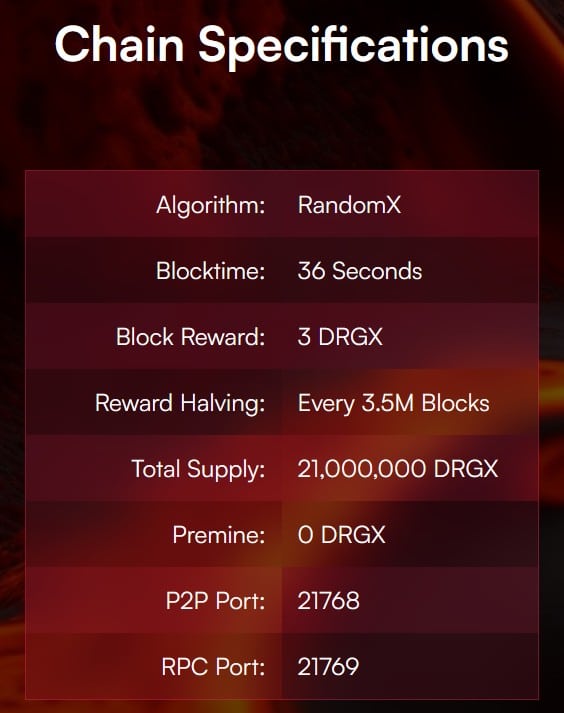
Q7 — DragonX uses a customized RandomX implementation. Can you detail the modifications that make it incompatible with Monero ASICs?
DragonX uses the official audited RandomX implementation with various configuration changes created by RandomX developers to allow for different «flavors». We do not have changes to audited RandomX internals which could compromise security. Specifically: DragonX uses 5 Argon2d iterations for cache initialization (Monero uses 3) and a custom «salt» for Argon2d. Our RandomX programs are twice the length: 512 vs 256. Twice the number of VM executions: 4096 vs 2048. Twice the chained VM executions per hash: 16 vs 8. All these together require more resources (RAM and CPU) versus default RandomX. If a RandomX ASIC/FPGA is created, it will be cheaper to target the default flavor (less RAM/CPU) — DragonX will be tipped off that RandomX is «broken» before it makes financial sense to build hardware specifically for our flavor.
Q8 — How does the «1-click» mining button work in the SilentDragonX wallet?
The 1-click mining GUI tries to make it as easy as possible for all DragonX users to mine with their CPU. It gives miners sensible defaults: all blocks are mined to a unique address (instead of one fixed address, which leaks metadata), and it only allows mining with at most the number of physical cores in your CPU. 1-click mining does not change OS-level configuration, so there’s still «fun» to be had by advanced users. Planned: RAM-aware tuning and automatic shielding of mined block rewards.
Q9 — What are Hush Arrakis Chains? How do they differ from traditional sidechains?
Hush Arrakis Chains (HACs) are not sidechains (L2s) because they do not depend on any other chain to exist. Each HAC is its own sovereign kingdom — very different from ETH where L2s must pay fees denominated in ETH. Each HAC uses the same source code which, when run with different options, creates different independent networks (a «run-time» fork rather than a source-code fork). HACs share a huge amount of code, which optimizes developer time. They are also compatible: if you own an address on one HAC you own it on every HAC.
Q10 — DragonX plans to implement «FireChat» based on HushChat. How are technical challenges of mempool-based instant messaging handled?
FireChat is the DragonX-branded GUI implementing the HushChat protocol. HushChat transactions transfer 0 coins, so there is no concern about rendering chat data still in the mempool — no double-spend possibility. A 51% attacker could randomly censor messages but cannot censor specific addresses (they are private and unknown). Censoring also reduces transaction fees, so there is a negative financial incentive. Additionally, GUIs can locally retain HushChats even after blockchain reorgs (they are just data, with 0 financial value).
Q11 — DragonX uses z2z transactions by default. How do they improve confidentiality?
Conventional transparent transactions have no privacy at all, which is why networks like Bitcoin are called surveillance coins. Shielded (z2z) transactions have maximum privacy: sender, receiver, amount and even the spent outputs are all private. Shielded transactions are mathematically «perfect» in the sense that they do not reveal a single bit of information — unlike current Monero transactions which offer probabilistic privacy via decoys. Full Chain Membership Proofs will eventually bring this level of privacy to Monero, which Hush and DragonX have already enjoyed for years.
Q12 — Sietch is mentioned as an additional security layer. How does it prevent metadata leaks about transaction recipients?
Sietch protects metadata not covered by the «perfect privacy» of shielded transactions, specifically the number of outputs (the «output arity»). On almost every blockchain, most transactions have two outputs (Alice paying Bob plus a change output). For surveillance coins this leak is the least of their problems, but for privacy coins it stands out. In the past some Monero transactions were more easily traced because they used more than two outputs. Sietch fixes this by padding the number of outputs of every transaction. So when Alice sends funds to Craig and Dan on DragonX, it looks exactly the same as when she transacts with Bob alone.
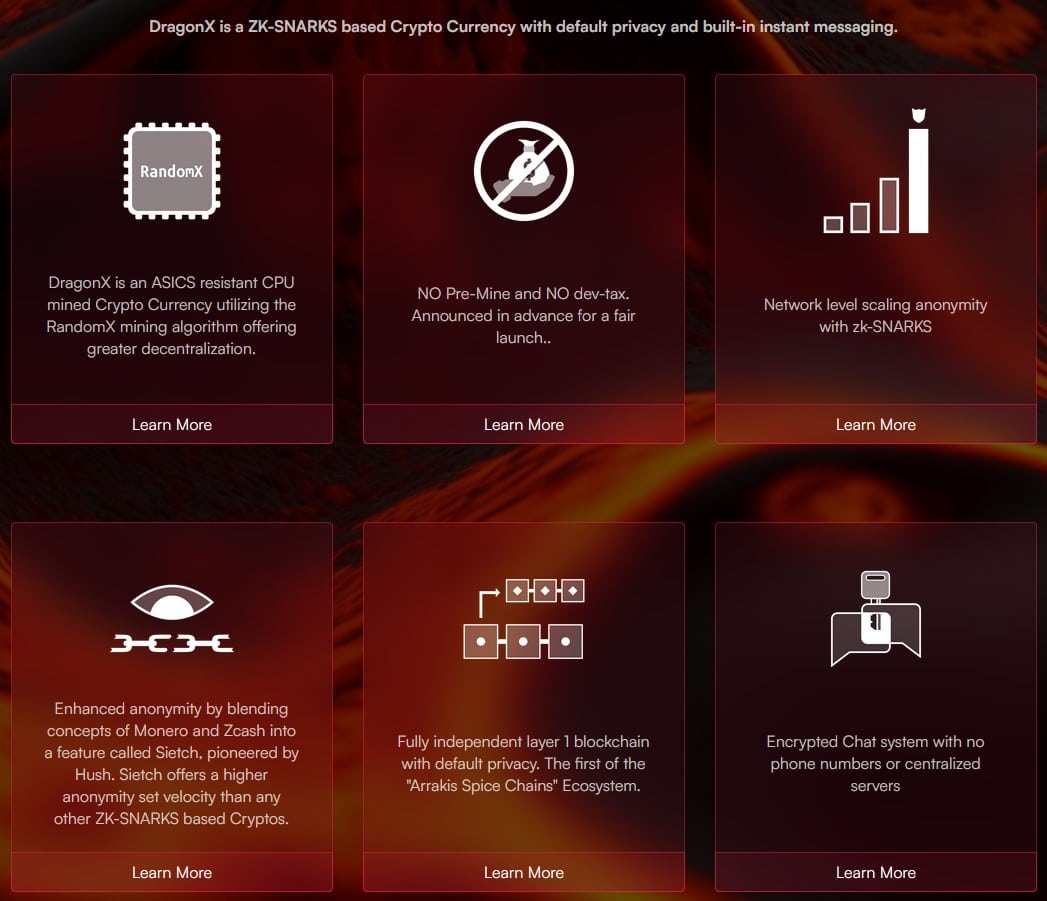
Q13 — TLS 1.3 encryption is used between DragonX nodes. What does it concretely improve in terms of confidentiality?
Most coins do not use TLS encryption between peers — Bitcoin and Monero still don’t encrypt by default. On surveillance coins, lack of TLS lets anyone correlate IP addresses with transaction sources, blockchain addresses and balances. Passive network spies (ISPs, every network in between) get all this metadata. For DragonX and all HACs, TLS forces an attacker to be an active network spy by running full nodes — and they can only probabilistically correlate IP addresses with transactions, not addresses or amounts. DragonX and HACs also support Tor V3 and i2p nodes. TLS connections to all peers are mandatory and cannot be disabled.
Q14 — Without premine or founder rewards, how does the DragonX team fund ongoing development?
So far I have funded the majority but several community members have funded servers and donated to bounties. When DragonX increases in value, of course the community will step forward and assist more with development. We see this in other projects all the time. I used to think the DAO model that Dash uses was a great idea but I don’t think so anymore — eventually voting yourself a block reward is ripe for corruption.
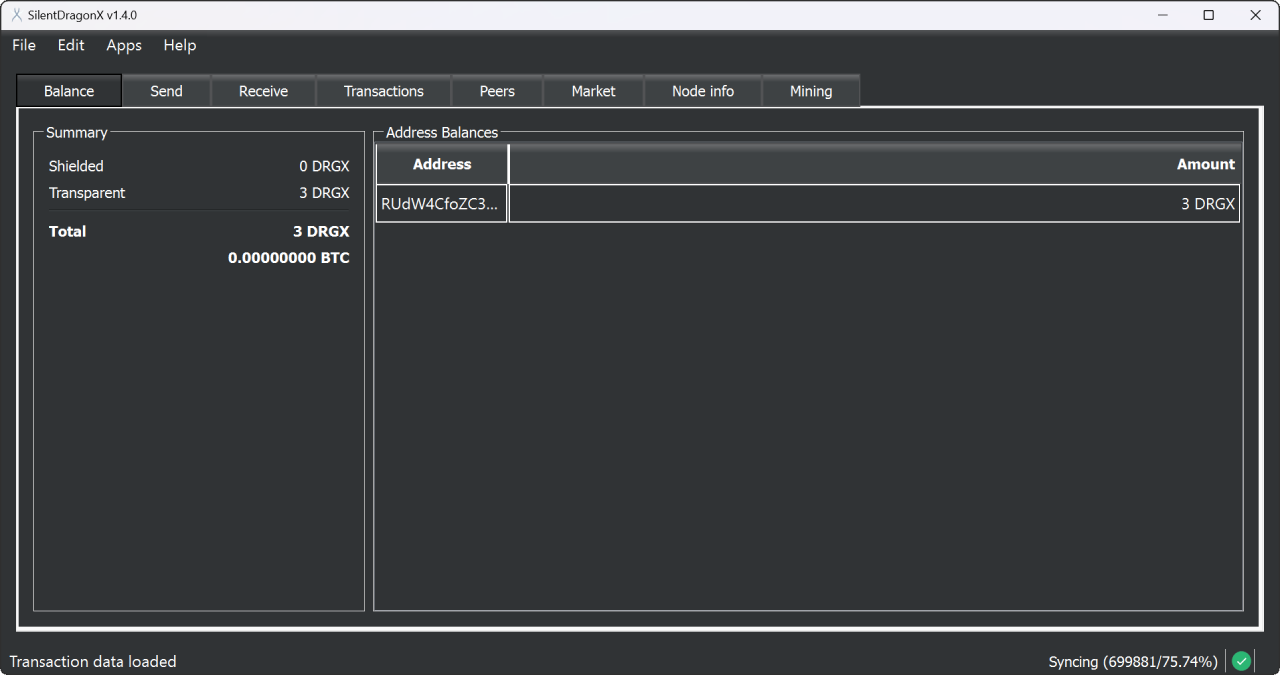
Q15 — How does the AgoraX marketplace work technically, and how is DragonX integrated?
AgoraX.is is basically a crypto Craigslist. We took a copy of the Silk Road script and stripped out the wallets, so we do not handle anyone’s crypto and do not profit from any transaction. We simply sell banner ads. Instead of wallets, we have a list of multiple privacy coins users can add to their profile. Sellers are added once approved as a trusted vendor. We don’t allow anything construed as illegal — we don’t want to end up in a cell next to Ross. AgoraX was originally intended to help an indigenous group in Mexico who created their own local currency called Tumin. I started working with them to create a crypto to work alongside their existing paper currency. Digital Tumin is the 2nd Hush Arrakis Chain. Currently Tumin is in 6 different regions of Mexico, with 3000+ users and 1.5 million paper Tumin in circulation.
Q16 — Where are you with the mainnet, and what are your main goals for 2025 and beyond?
As a P2P private cryptocurrency I think we’re doing well. We have a great GUI wallet with 1-click mining, an Android wallet, and we just finished the lite wallet giving us the full functionality of HushChat. The Android wallet allows messaging in the memo field. Several ideas I would like to see implemented soon: nicknames or aliases like Zano uses, ordinals-style features, file-sharing hacks and more.
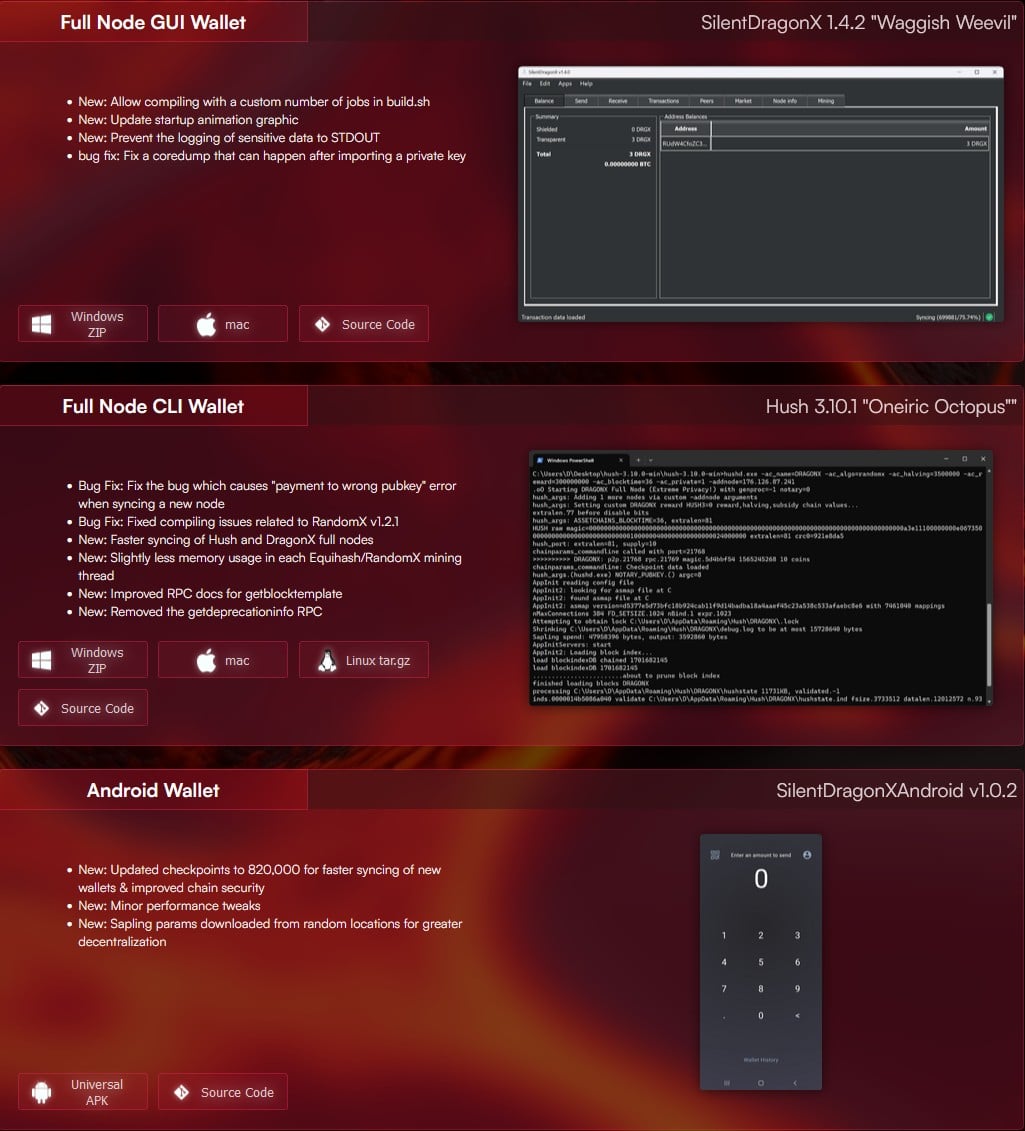
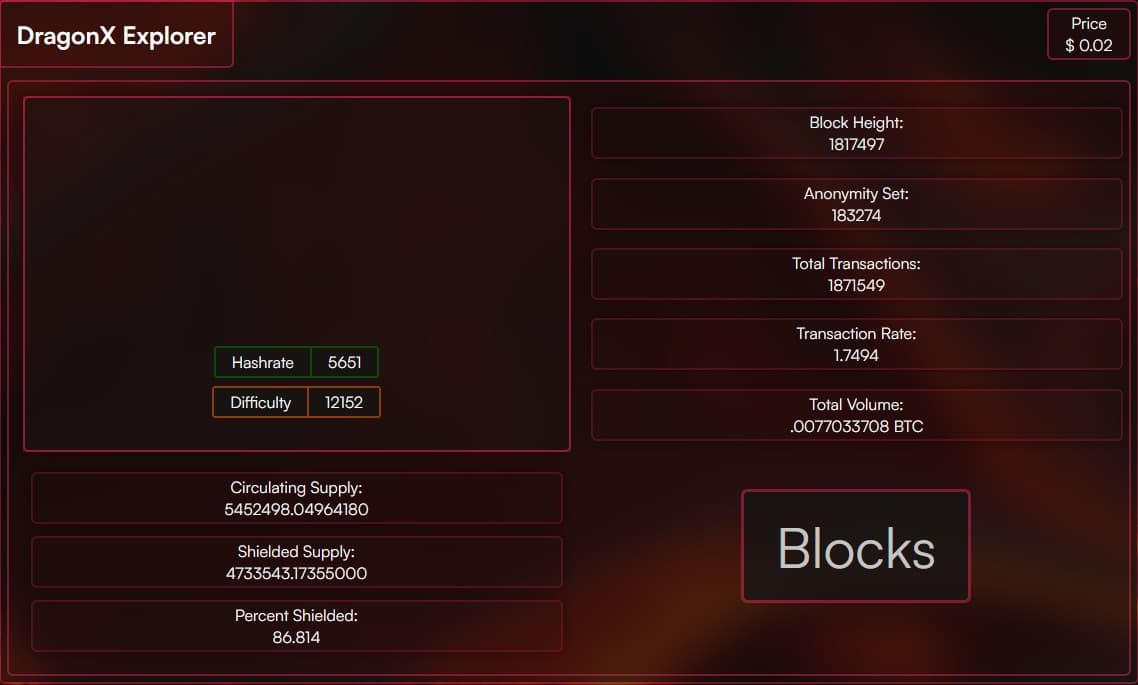
Q17 — DragonX is among the very low-cap privacy projects with a market cap around $60K. What are your ideas to improve visibility and reach?
We’ll be adding more videos, attending more crypto events, running X.com ads and getting listed on more exchanges including Basic Swap. Our team feels Basic Swap is a better privacy-preserving choice than many other DEXs. Serai DEX would certainly be a goal as well.
Q18 — Your recent participation in Monerotopia must have been enriching. Any synergies with other privacy projects?
Monerotopia was awesome — I made quite a few great contacts. DragonX was not a sponsor but I volunteered for the event. I think it’s one of, if not the best, crypto event around. I also work with Anarchapulco, where I coordinate the crypto stage. This gives me opportunities to promote DragonX and the crypto charity functions I’m part of. We’ve raised a ton of money for a local orphanage near Anarchapulco for the past 8 years. During Hurricane Otis, with another DragonX community member «Henza», we worked with the Anarchapulco team to deliver thousands of meals and rebuild the home of a local resident who had helped us with the conference for 5 years. To call this rewarding is an understatement. I’m just a crypto activist with a focus on privacy coins. I don’t feel like we’re competing with anyone other than fiat.
Closing words
DragonX embodies the cypherpunk spirit, putting privacy and individual freedom at the heart of the project. Launched fairly with no premine or founder reward, DragonX demonstrates a real commitment to building a decentralized ecosystem. With a customized RandomX implementation and advanced privacy features like Sietch, it serves the autonomy of individuals by making mining accessible to everyone and offering maximum on-chain privacy. Its commitment to humanitarian initiatives and its community-based approach aim to create a positive impact on the world while preserving freedom.
Thank you for your time and we hope you enjoyed reading it. — Rowenta01 & The_Dowser
Stay in the loop
Crypto Lowcap is an independent media outlet covering privacy, decentralization and low-cap innovation since 2016. We never accept paid coverage — our analyses are our own.
Follow Rowenta on X · Follow The Dowser on X
Liked this piece? Share it, challenge it, or send us the next project we should investigate.