GRIN MimbleWimble: Interview with John Tromp
INTERVIEW · 20 February 2023
GRIN MimbleWimble: Interview with John Tromp
Editorial note — April 2026
This interview was originally conducted in 2021 by Cekickafa (Cobragrin) and republished on Crypto Lowcap in February 2023. It is preserved here for archival and historical reference. Project details, team composition, sync technology and roadmap items mentioned below may be outdated. The fundamental design philosophy of GRIN — linear emission, simplicity, fair distribution — remains as relevant as ever, but always verify current technical information directly with the project before acting.
Introduction
In this interview, Cekickafa (Cobragrin) puts questions to Dutch computer scientist and long-time GRIN core developer John Tromp, who shares valuable insights on the GRIN MimbleWimble blockchain. John Tromp is a renowned mathematician and researcher who has worked on distributed-computing problems, and is the author of the Cuckoo Cycle algorithm used in GRIN’s proof-of-work. He has been working on GRIN since before its initial 2019 launch.
Connect with GRIN
- Forum: forum.grin.mw
- Discord: discord.gg/Z3sEfEU
- Keybase: keybase.io/team/grincoin
- Newsletter: grinnews.substack.com
The interview
How long have you been contributing to GRIN? How did you start?
John Tromp: I’ve been working on Cuckoo Cycle since late 2013. When Igno expressed interest in using Cuckoo Cycle for his MimbleWimble implementation, I was thrilled to see my PoW adopted by the most promising blockchain design and eager to help. Initially with PoW-related matters, but later expanding to emission and MMR design.
Why is GRIN Proof-of-Work, and what is the Cuckoo Cycle algorithm?
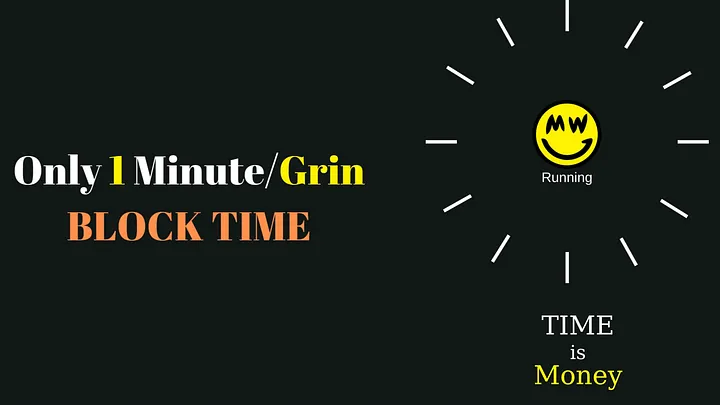
John Tromp: PoW is not only the simplest known consensus mechanism, but just as importantly, the only known provably fair distribution mechanism, where no party has advantaged access to coins. Grin’s simplest possible 1-coin-per-second forever emission extends that fairness even across time — early miners have no advantage over later ones. So Grin is PoW because only PoW satisfies its objectives of simplicity and fair distribution. Cuckoo Cycle is a family of PoW puzzles in which solutions take the form of fixed-length cycles in certain random graphs. While efficiently looking for cycles requires lots of SRAM, solutions can be instantly verified with no memory use.
There are many other projects in the cryptocurrency space — how does GRIN fundamentally differ? If you had to choose 3 most important features, what are they?
John Tromp: Grin is unique in its pure linear emission. If we compare different PoW coins 100 years from now, all having similarly low yearly supply inflation rate below 1%, but one had an even distribution over all that time while all others had it mostly concentrated in the first few years, then the former emission looks rather preferable. The focus on simplicity and elegance is also quite unique, preserving and making the best of the qualities inherent in MimbleWimble, Merkle Mountain Ranges as the central data structure, and scriptless scripts as means of expressing a wide range of functionalities. It’s hard to overstate the advantages that a simple design brings, especially long term. Picking a third important trait is harder — perhaps the great narrative behind Grin, with not one but two mysterious founders, neither seeking any financial gain.
Why linear emission and not capped supply? Is this a weakness or a strength long term?
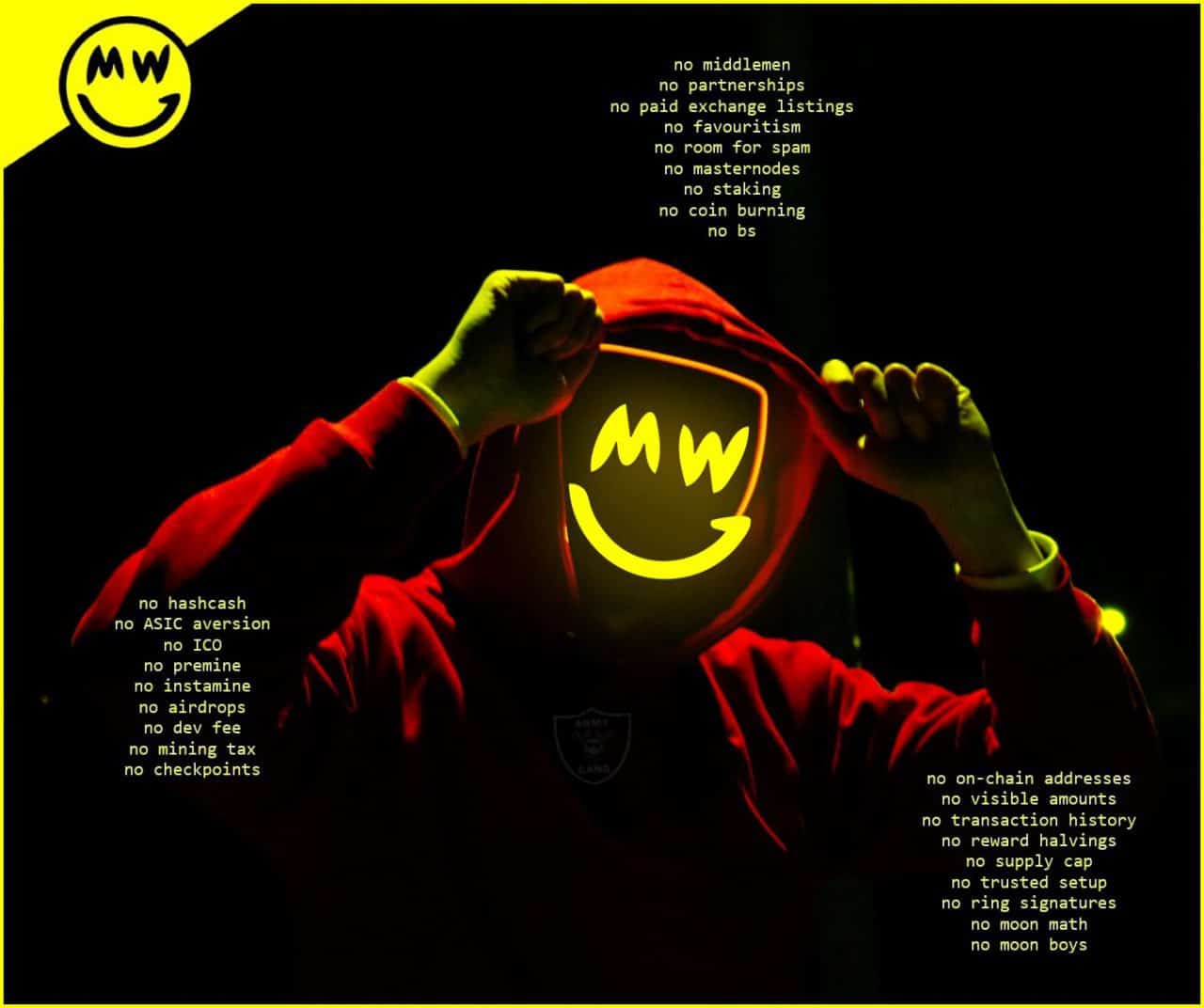
John Tromp: Capped supply serves no purpose except to instill FOMO. It’s more complex than linear emission, requires picking arbitrary parameters like total supply and halving schedule, leaves long-term security in doubt (when block subsidy becomes insignificant), and concentrates wealth on early adopters. I see nothing but downsides, except for speculators and grifters. Only GRIN is fair to late adopters. In a century, yearly supply inflation is very small — perhaps barely enough to compensate for unavoidable coin loss — so it still reaches an effectively capped supply, rather than an artificial one. GReedy, it’s not.
Which feature do you most want to see implemented on GRIN in the near future?
John Tromp: Some Zero-Knowledge-Proof (ZKP) alternative for accelerated sync. Grin’s sync, especially the new PIBD, is great and gives the most confidence of a correct history, but it takes time and space linear in history length (downloading and verifying all kernels). As an alternative, those who trust ZK-SNARK and/or STARK technology might be able to accelerate kernel-history verification by instead verifying a short zero-knowledge proof that such a kernel history exists for a given kernel MMR root. The big challenge is that Grin’s cryptographic primitives, in particular the secp256k1 curve and Blake2b hash function used in MMR, are not particularly ZKP-friendly — but hopefully future advances will make this feasible. By keeping it optional and outside of Grin’s consensus model, it could be replaced at any time and doesn’t negatively impact Grin’s simplicity.
Any message for the Grin community? For newcomers, how can they contribute to Grin?
John Tromp: I expect the community will find Grin’s unique approach refreshing and relaxing, with no expectation of profit and more focus on how Grin works than on how its price behaves. Regarding contributing: there’s not much to add to the CONTRIBUTING.md on GitHub. Find an area you can help with, and do it. Open source is about collaboration and open participation. Try to make your code look like what already exists and submit a pull request. I hope GRIN can attract more newcomers by its uniqueness and simplicity, and not by any expectation of profit.
Will Grin be successful?
John Tromp: It’s hard not to see a bright future for MimbleWimble’s brilliant design, which Grin takes most advantage of. Keeping things simple, elegant and fair all have lasting value, maximizing potential future interest in Grin. So yes, I think Grin will be successful in getting more mindshare in the next few decades, even if not reaching a market cap measured in billions.
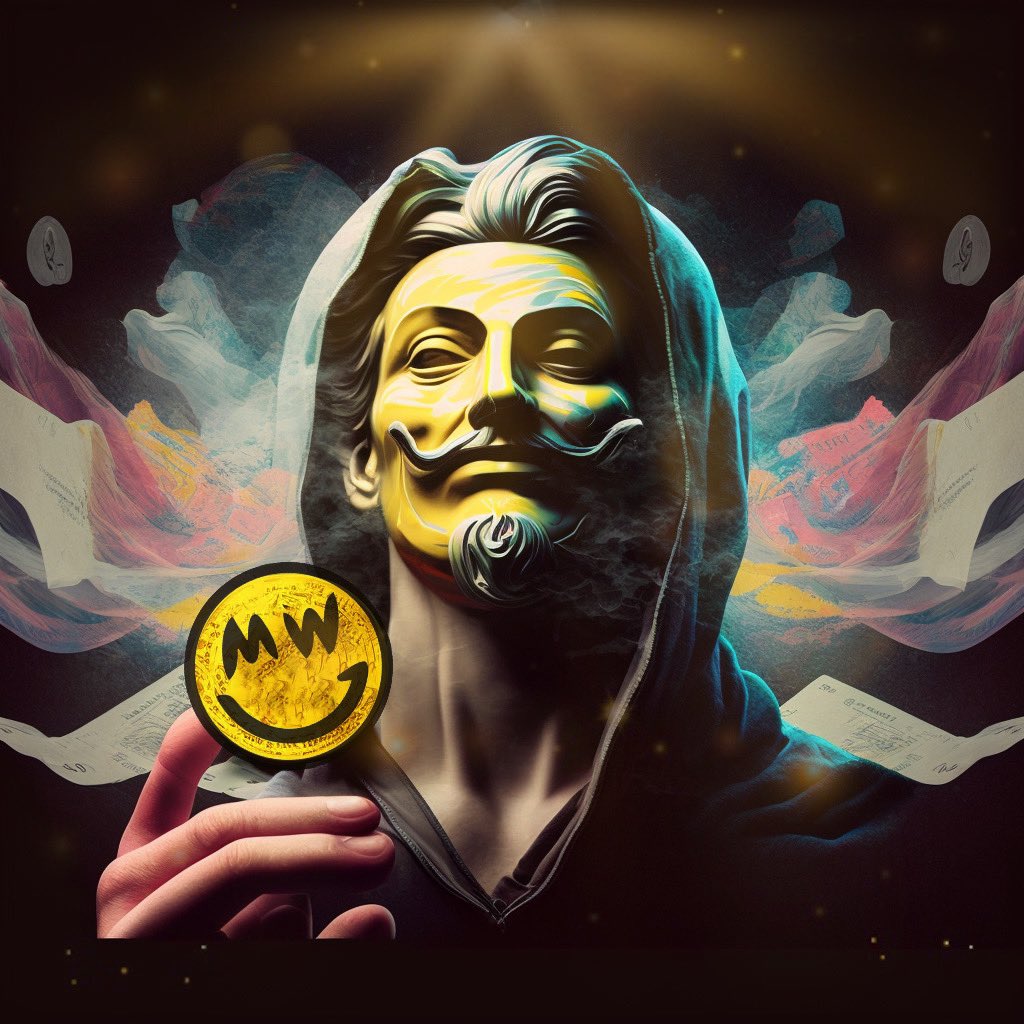
A huge thank you to John Tromp for his permission to publish the interview on Crypto Lowcap (originally hosted on grinpost.medium.com), and to @Grin_MW on Twitter for the illustrations.
— Rowenta01
Stay in the loop
Crypto Lowcap is an independent media outlet covering privacy, decentralization and low-cap innovation since 2016. We never accept paid coverage — our analyses are our own.
Follow Rowenta on X · Follow The Dowser on X
Liked this piece? Share it, challenge it, or send us the next project we should investigate.