Xelis Unveils: Exclusive Interview with Slixe
INTERVIEW · 2 October 2024
Xelis Unveils: Exclusive Interview with Slixe
Summary
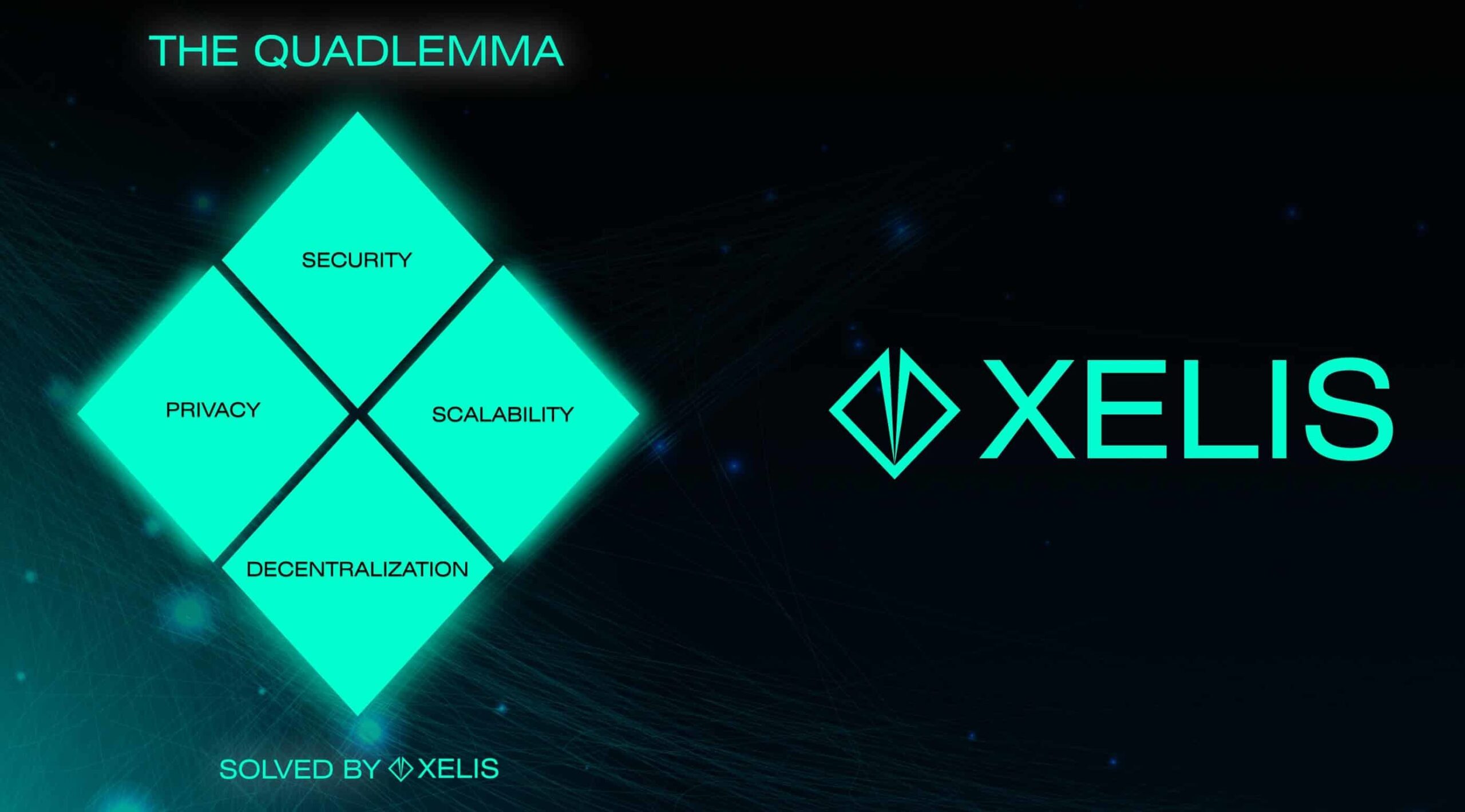
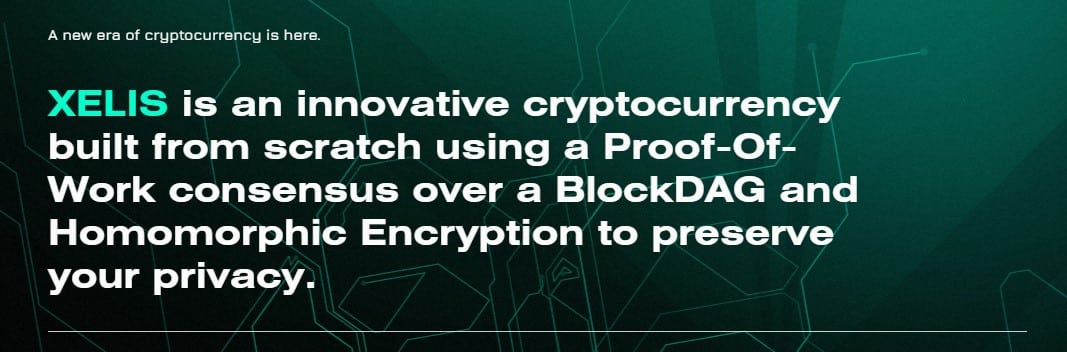
Xelis is an innovative cryptocurrency designed from scratch, combining Proof-of-Work consensus and a BlockDAG architecture to deliver fast and secure transactions. The project stands out for its use of homomorphic encryption, preserving user confidentiality while ensuring data integrity. Beyond its advanced cryptography, Xelis aims to support smart contracts, opening the door to decentralized applications. With a strong commitment to security, scalability and privacy, Xelis positions itself as a serious contender for users who want to navigate the crypto ecosystem without sacrificing their privacy.
Connect with Xelis
- Forum: xelis.io
- Discord: discord.gg/xelis
- Telegram: t.me/xelis_io
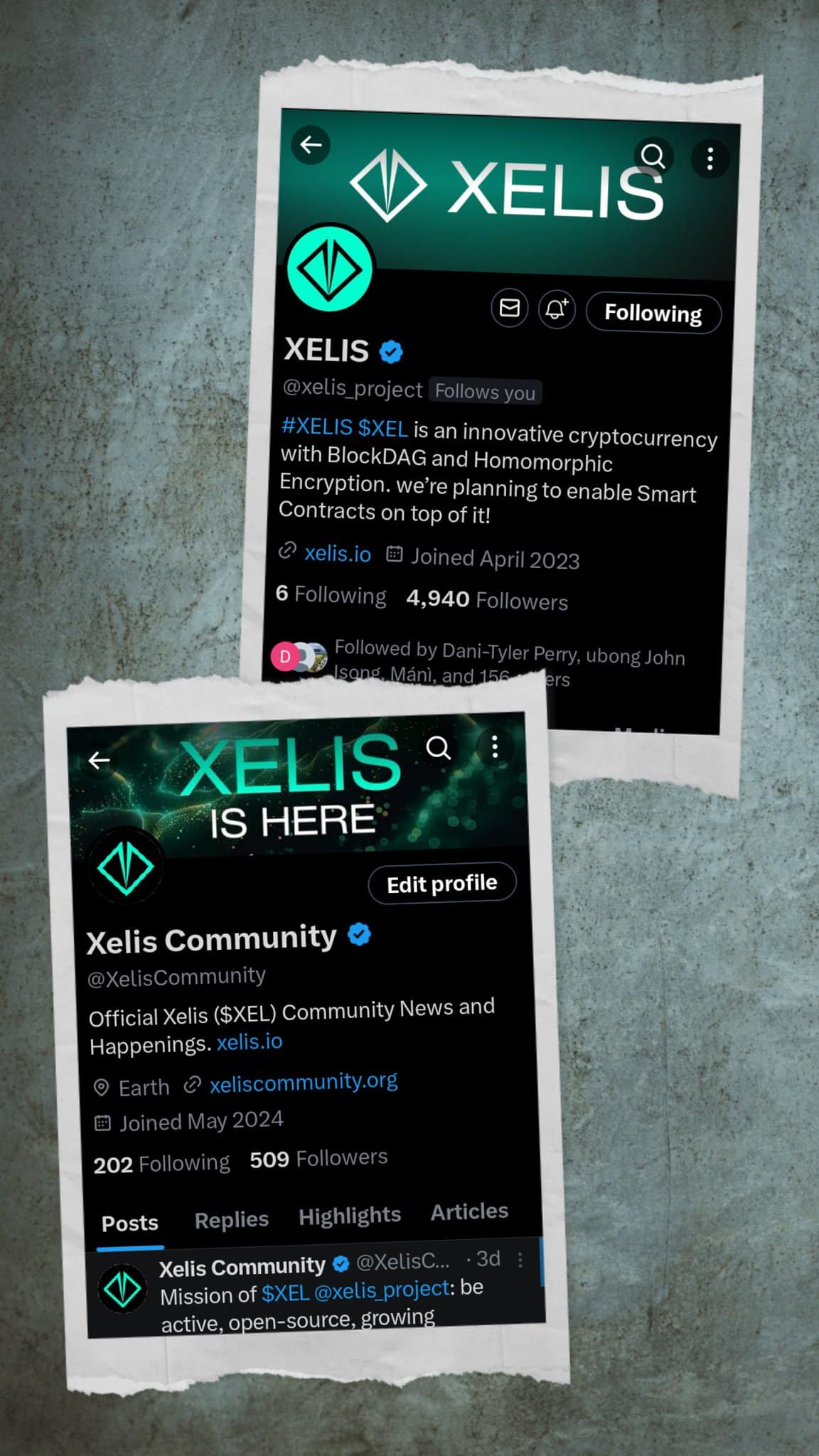
- Twitter: @xelis_project
The interview
Q1 — Welcome Slixe! To begin, tell us about yourself: what is your background, and what inspired you to embark on this adventure?
I’m just a regular guy who has been in crypto since 2015, and followed a few projects. I have been passionate about programming because it gave me the opportunity to create my own things. I started as a CPU miner, then GPUs — which I totally stopped in 2020. I was following another project from 2018 until last year (2023), but I was curious to create my own project, with my own vision, as I was sometimes in disagreement with design choices made there. First, my blockchain was just a Proof-of-Concept project to learn and improve my skills, but I got quickly joined by other people seeing a great opportunity to make something fresh.
Q2 — What unique innovation does Xelis bring to the cryptocurrency ecosystem, and what advantages does it offer over existing projects?
We want to keep everything simple and create our own path: easy to use, while providing better scalability and privacy than Bitcoin or Ethereum. Our distinctive advantages: we’ve built everything from scratch — no fork of a known coin — reflecting our determination to do something new. We’re also enabling Homomorphic Encryption on a Layer 1 chain while being compatible with a BlockDAG in an account model. We’re actively working on Smart Contracts on the XELIS network with a unique difference: nobody can freeze tokens once they are in your wallet, and it’s your wallet that manages and stores them, not a smart contract.
Q3 — How many developers are currently working on the project, and how is the team organized?
We are currently 3 active developers in the team. Each of us is assigned a product/domain. Ez3kiel is exclusively on Genesix Wallet (design and development), with help from G45 and myself. G45 is assigned to all the front-end work (explorer, stats, status, faucet, etc.). Other developers (HectoFR, Pieswap) are solicited only when we’re in a rush or for specific tasks. Yar is our designer and made all the models needed for each product. Cyber, TheAllFather, N1ko13 act as multi-task moderators, mostly in charge of communication and partnerships. My role at XELIS is to keep pushing back our limits and keep everyone motivated. I’m more like the lead developer, even if everyone is in full autonomy and works on what they like to do.
Q4 — How do you see the project’s governance evolving long term, particularly around decision-making and development funds?
I hope we see more and more developers being interested in XELIS and start building on it or even contributing — we are already seeing this with a few people on the Smart Contracts side trying to help. We had ideas of building a DAO to transfer the responsibilities of the development funds to it, so people can be directly involved in how it is spent. This is only an idea for the moment, but I would like everyone to be able to give their voice. Or simply disable the dev-fee program by reducing it to 0% after N years to be completely free.
Q5 — The project was launched fair (no premine), and the team is funded by 10% of block rewards. Can you explain this choice?
I don’t like the idea of premine anymore since I discovered the dev-fee system used by Zcash. I see premine as a sword of Damocles hanging over everyone — it could fall at any moment. With a dev-fee, it follows the blockchain emission and we don’t own more than the configured percentage. This gives us time to prove our intentions, build a good relation with the community, and keep working long-term for the success of XELIS.
Q6 — Markets are harsh between bull cycles. Are Xelis’s launch and tokenomics well suited to the current cycle?
I don’t really look at this. I’m just having fun building and coding every day on XELIS — that’s my passion. I can’t comment on the market and even if I could, it would be terribly biased. The only reason we launched in March is because I felt the core was ready, and I wanted to slowly build a community around the project to attract enough developers once the Smart Contracts go live. I’m afraid that without enough community developers interested in XELIS, the project would be unused like 99% of other crypto projects.
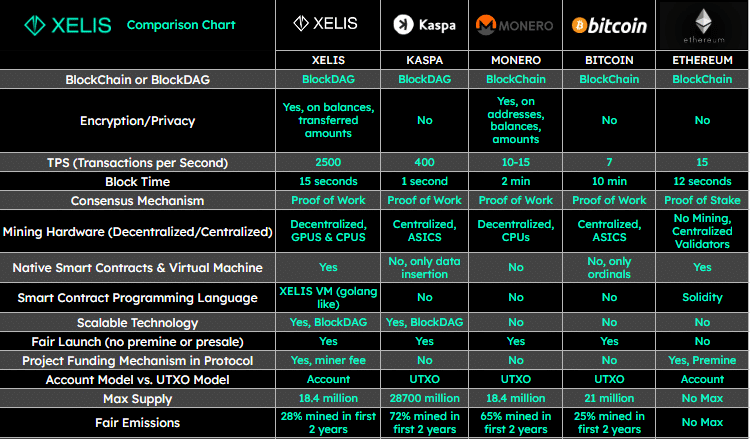
Q7 — Xelis uses an innovative ChaCha8 + Blake3 hashing algorithm, resistant to ASICs and FPGAs. Is this opposition to ASICs permanent or temporary?
My main argument for ASIC resistance: CPUs and GPUs can be bought by anyone, anywhere — and almost everyone owns one. A low barrier to join and secure the network through PoW means better decentralization. Nothing wrong with ASICs per se, but they create metal waste once outdated. CPUs and GPUs have many other use-cases even after years — my old RX 570 used in a mining rig still works well in my computer. I also dislike the «better efficiency» argument: the more popular a network is, the more energy it will use no matter the device. ASICs will just consume more to produce more hashrate. I really like what CryptoNight provided: any CPU or GPU could mine together on the same algorithm. That’s what I’m trying to provide again, because Monero is what got me interested in mining in the first place.
Q8 — How does the «Smooth Difficulty Adjustment» (Kalman filter-based) mechanism work, and what does it bring?
A good example: when miner whales do «waves» on the network hashrate, on moving-average difficulty algorithms they could mine at low difficulty and leave once it stabilized to the real network hashrate, leaving other miners stuck at higher difficulty and slower rewards. The Kalman filter rapidly converges on the actual network hashrate while filtering out misleading temporary spikes. If tomorrow we lost 90% of the network hashrate, the next block would be hard to mine and could take hours instead of the configured 15s — but once mined with the remaining hashrate, the difficulty would be drastically adjusted to be accurate again, preventing the chain from being stuck on a high difficulty for several blocks.
Q9 — Xelis uses Twisted ElGamal homomorphic encryption for transaction confidentiality and plans Smart Contracts via XELIS-VM. How will the two reconcile?
Only balances and transaction amounts between users are encrypted. ZK-Proofs help validate that a ciphertext is valid against conditions (e.g. not above the balance of the user). Transaction fees are plaintext, and just like block rewards they are added to the miner’s balance — ElGamal allows operations between plaintext and ciphertexts. Smart Contracts can easily send coins to a user. This also helps auditability: we know exactly what’s going on with smart contracts. If a user needs to deposit coins to a Smart Contract, it will be a «plaintext deposit» visible to anyone. Think Ethereum, but with privacy on user balances and wallet-to-wallet transactions only.
Q10 — How does Xelis plan to manage scalability and performance long term, given BlockDAG, Homomorphic Encryption and ZK Proofs?
We need to reduce even further the time to verify and execute each transaction or block based on the current DAG order. Currently we’re really good and don’t have much traffic yet, but this could become a problem when we handle more than Ethereum-level traffic. More research will be needed. Our transactions and blocks are lightweight — fast to propagate and verify. After 5 months we’re only at around 6 GB on disk with over 285,000 transactions (each TX can have up to 255 transfers). We provide a pruning feature to remove old blocks/transactions, and we can have light nodes via fast-sync mode (sync only the top chain, not history). To reduce a pruned chain even further, we can delete older versions of balances and nonces that can’t be used anymore.
Q11 — How does Xelis address the blockchain trilemma between decentralization, security and scalability?
Decentralization and security: I bet on GPUs and CPUs to decentralize the network as much as possible. Simplicity to run a node and compatibility with low-spec devices (currently 800 MB of RAM, 10 GB disk space). Scalability: BlockDAG — during the network upgrade in July we hit up to 12 blocks per second until the difficulty adjusted again. ZK Proofs are aggregated and verified in batch, which allows us to reach as low as 0.40 ms per TX with batches of 100 TXs in best conditions. BlockDAG generation/verification takes only a few milliseconds. PoW verification takes only 1 ms on average per block. The faster a block is verified, the better for network scalability.
Q12 — What plans does Xelis have to encourage developer adoption and dApp integration?
Still to be determined, but the dev-fee will be a great advantage here: we can organize build competitions, sponsor dApps and more. We listen to our community and try to act as they want. The main success point for us is giving developers tools to easily build new things.
Q13 — Can you tell us more about the Smart Contracts roadmap? What are the major milestones for 2025 and beyond?
Currently there is no deadline for Smart Contracts and we try not to give any, to prevent short-term pressure from the community. We want to build something good enough — not ship something unfinished just to add a checkmark on the roadmap. We need it to be safe and reliable, otherwise Smart Contracts would just add many attack vectors and we’d see the same issues as others (chain stopped, etc). Engaged community members can follow the development on Discord. Once Smart Contracts are released, the main focus will be DeFi and improving the VM and chain speed.
Q14 — What are your marketing and communications strategies? The visual identity is particularly successful — how will you capitalize on it?
I’m maybe going to finally accept some voice interviews, or go to conferences to meet people. On the project side, Cyber works on partnerships and marketing while keeping the community active and aware of how the project is going.
Q15 — Many blockchain projects face regulatory challenges. How does Xelis plan to reconcile user privacy with compliance pressure?
Our plan is to be an alternative and to educate people while fighting for their privacy. A blockchain keeps a trace of everything that happens on chain. If people want to do illegal things, better use fiat than something analyzed and stored forever. I had an idea of generating a proof verifiable at a specific topoheight, to prove you own N coins — useful for temporary viewable access to a wallet.
Q16 — Which projects in the crypto ecosystem inspire or excite you most?
Bitcoin, for creating all this — without it, maybe nothing similar would exist. It’s the grandpa of all. Starknet, more particularly the Cairo VM — I really like their idea even if I didn’t take the time to dig deeply into it. Monero, as they are fighting for the full privacy right (and because it’s one of the few I started with). Kaspa, because they are working hard on scalability and their community is really active. And the older one I want to salute: DERO, because it’s the project I exclusively followed and participated in from 2018 until 2023.
Closing words
Xelis is shaping up to be a promising project driven by technology enthusiasts. We look forward to following its progress and seeing the protocol adopted on a large scale. Thank you, Slixe, for your time, and we wish you all the success you deserve.
— Rowenta01 & The_Dowser
Stay in the loop
Crypto Lowcap is an independent media outlet covering privacy, decentralization and low-cap innovation since 2016. We never accept paid coverage — our analyses are our own.
Follow Rowenta on X · Follow The Dowser on X
Liked this piece? Share it, challenge it, or send us the next project we should investigate.